Mont Blanc Restoration / California
Water · Fire · Mold
Your property.
Our next priority.
01 / Restoration services
One partner.
A complete recovery plan.
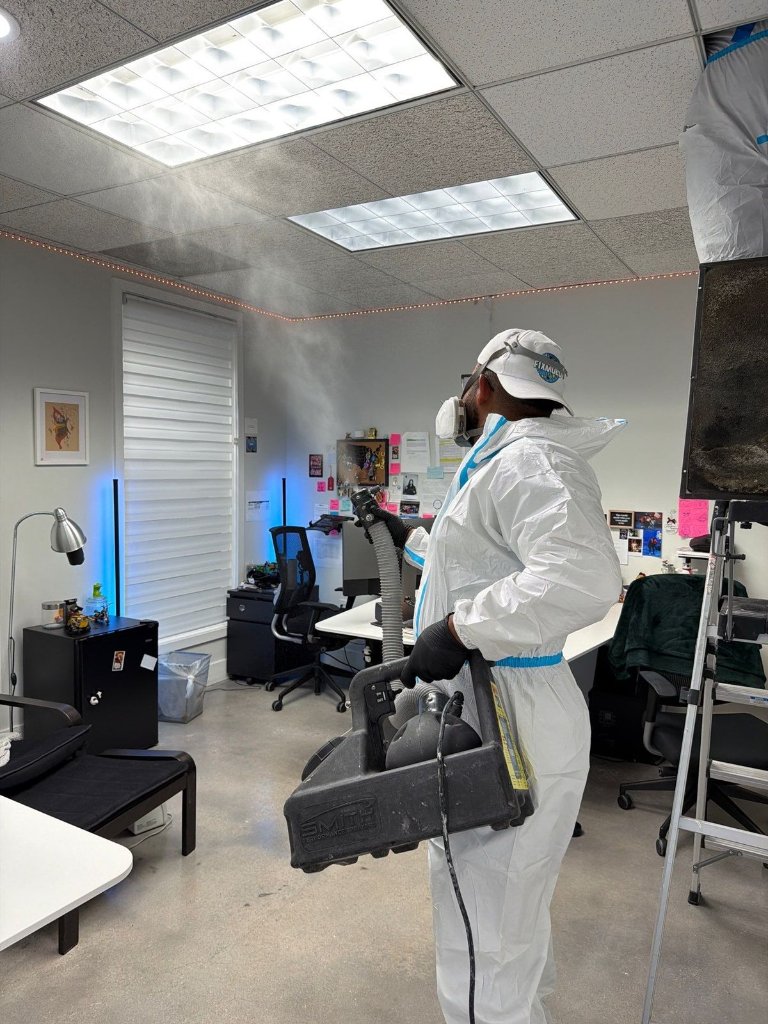
From a localized leak to a complex building loss, start with a clear scope, the right response, and measurable progress.
02 / Built around your building
Different buildings.
Different stakes.
The same accountability.
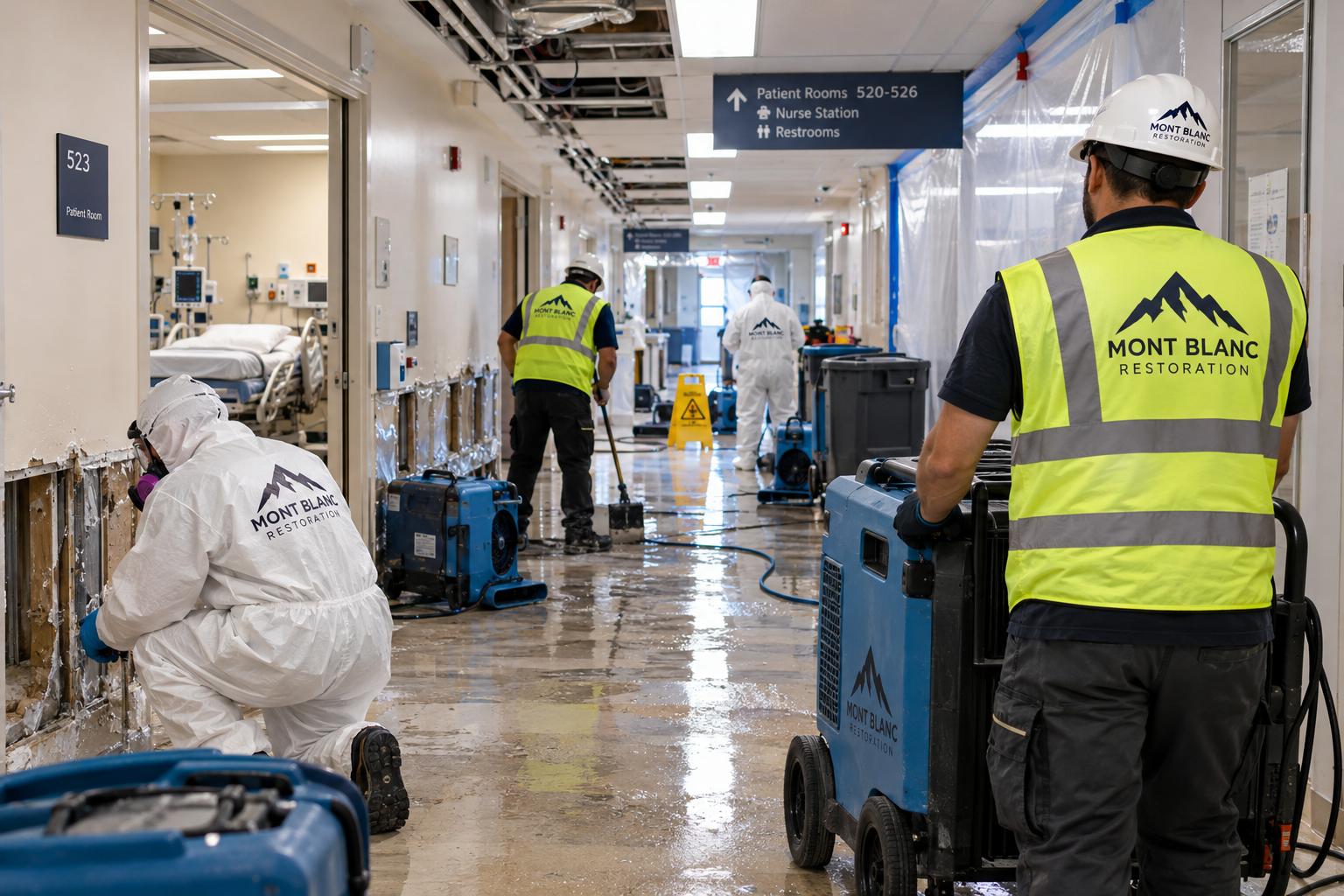
Patient care. Production schedules. Tenant access. Your building is more than square footage. Recovery planning should respect the people and operations inside it.
For the people responsible for what happens next.
Property and facility managers · Building engineers · Risk managers · Insurance adjusters · Healthcare administrators · General contractors
Restoration considerations by property type
Specialized facilities require site-specific coordination. Share your building use, safety requirements, and access restrictions so we can assess the right scope.
Discuss your facility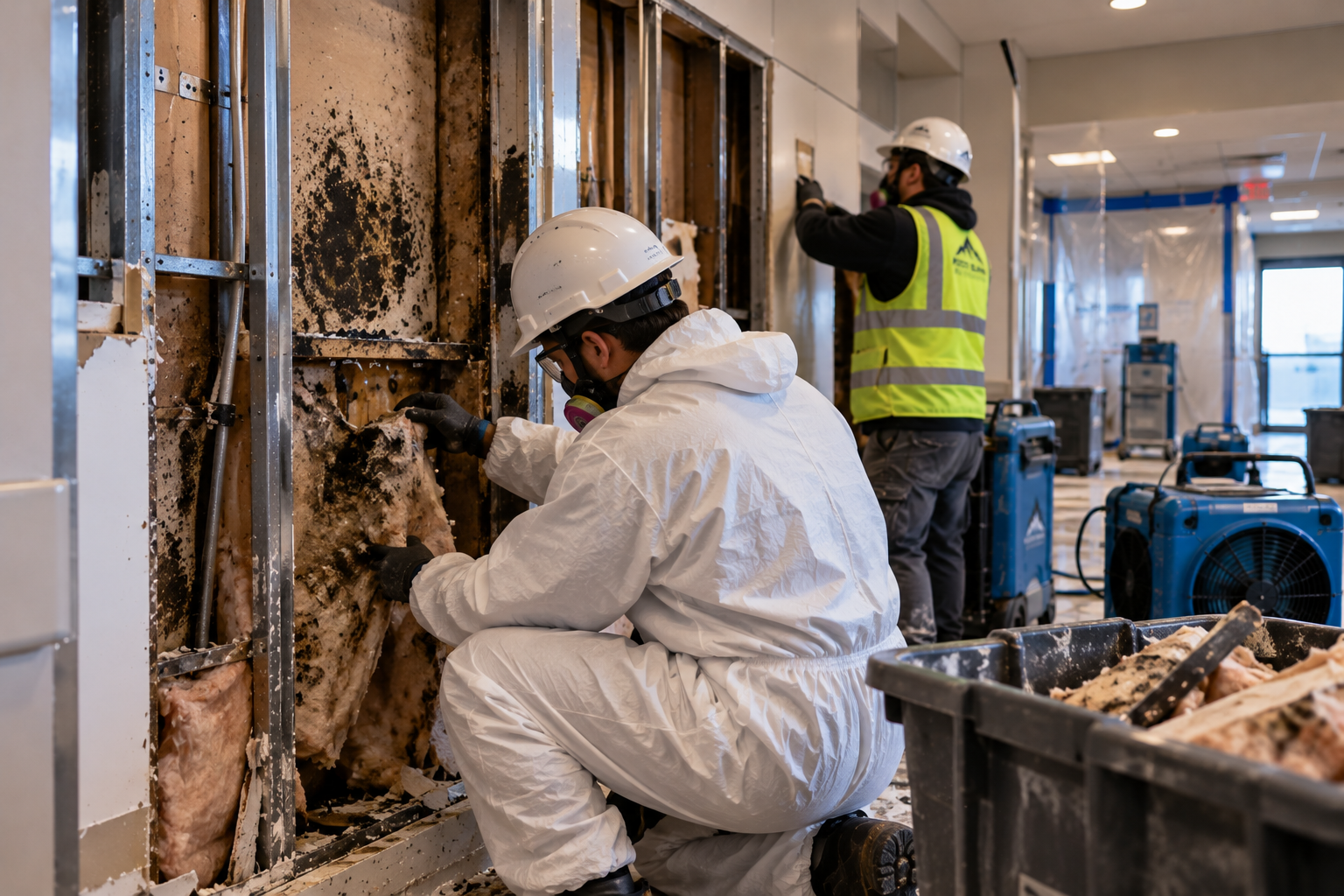
Behind the surface
What you can’t see
still matters.
Moisture correction is central to lasting recovery.
03 / Mold & indoor environments
Hidden damage.
A considered response.
Mold behind drywall, inside insulation, above ceilings, or under flooring requires more than surface cleaning. The first question is where the moisture came from—and whether it is still there.
Investigate the moisture
Assess the source, affected assemblies, and potential migration into adjacent areas.
Control the work zone
Plan containment, HEPA-filtered air control, and pressure relationships around occupants and operations.
Remove, clean & verify
Select appropriate removal and cleaning methods, document drying, and define post-remediation acceptance criteria.
04 / A clear path forward
Less uncertainty.
More informed decisions.
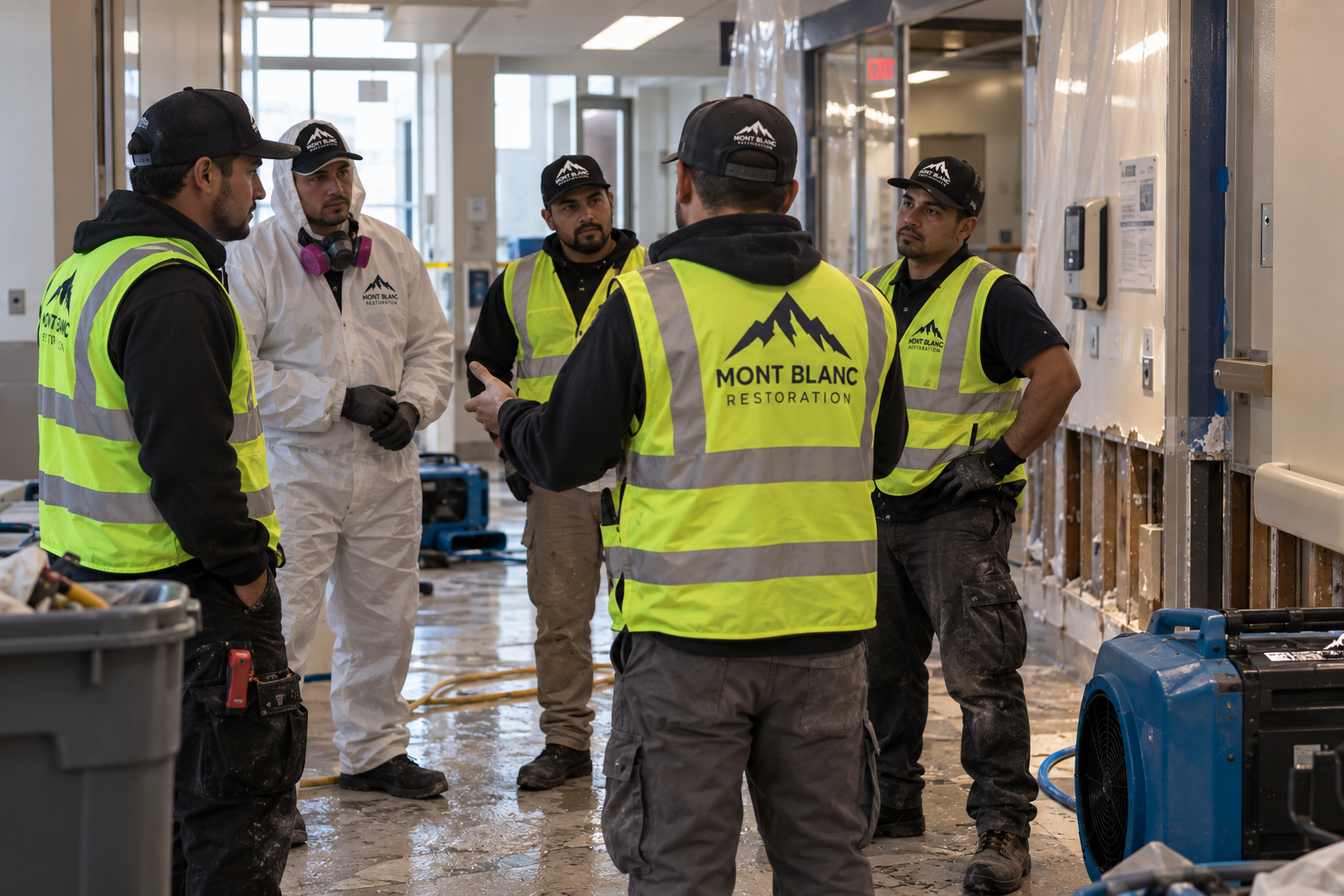
A recovery plan is only useful if everyone understands it. Set the scope, track the conditions, and document what happens next.
01
Assess & plan
Identify the source, affected materials, safety needs, and operational constraints.
02
Stabilize & mitigate
Plan extraction, containment, selective removal, and equipment for the documented scope.
03
Monitor & document
Track moisture trends and conditions. Keep the building team informed as the scope evolves.
04
Verify & restore
Confirm project-specific completion criteria and plan the handoff to reconstruction.
Built for a clearer claim conversation.
Photos. Moisture maps. Daily drying records. A traceable scope. Organized documentation supports your adjuster’s review without promising coverage or approval.
05 / Restoration in focus
The work behind
the recovery.
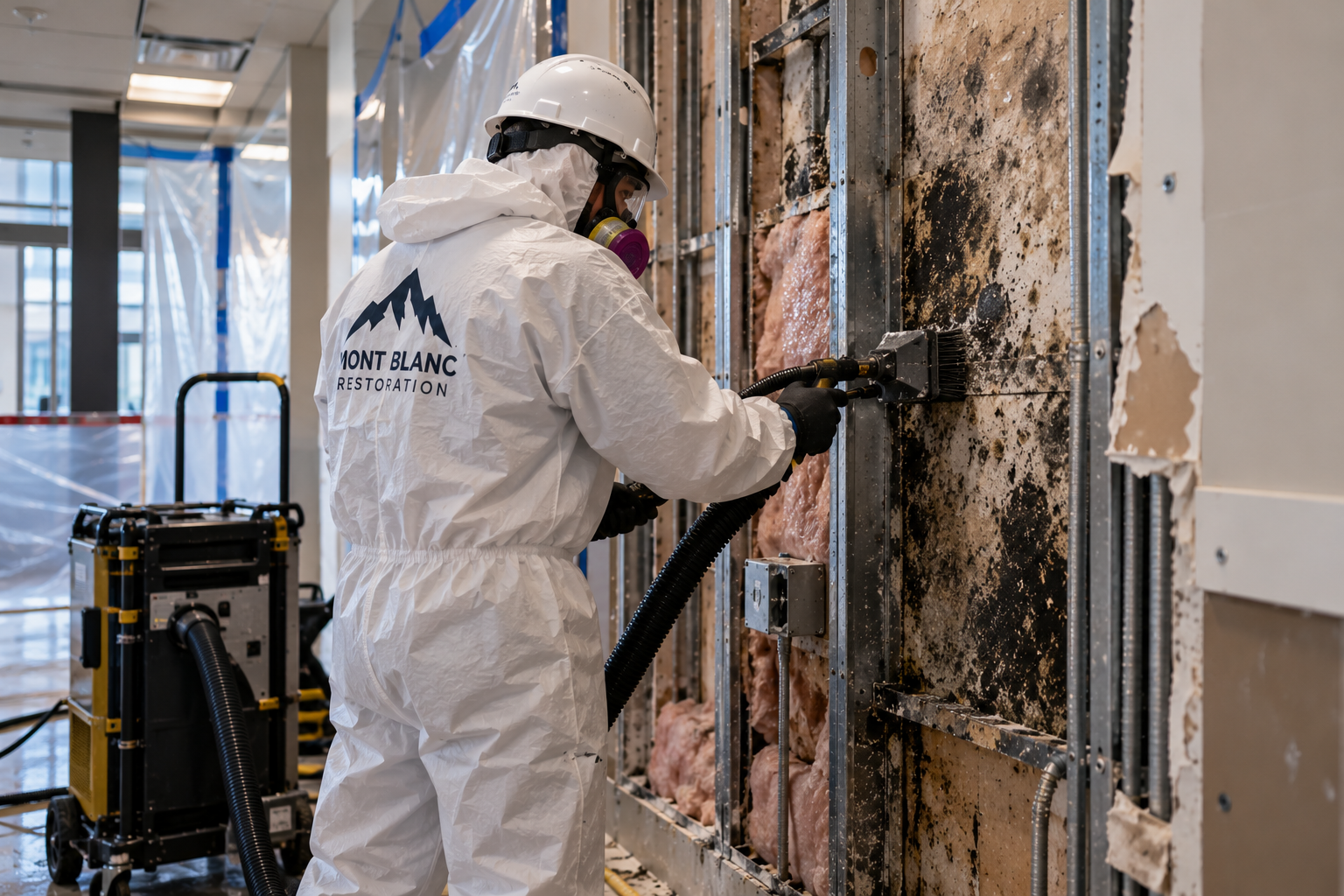
Controlled work zones
The detail is in the work.
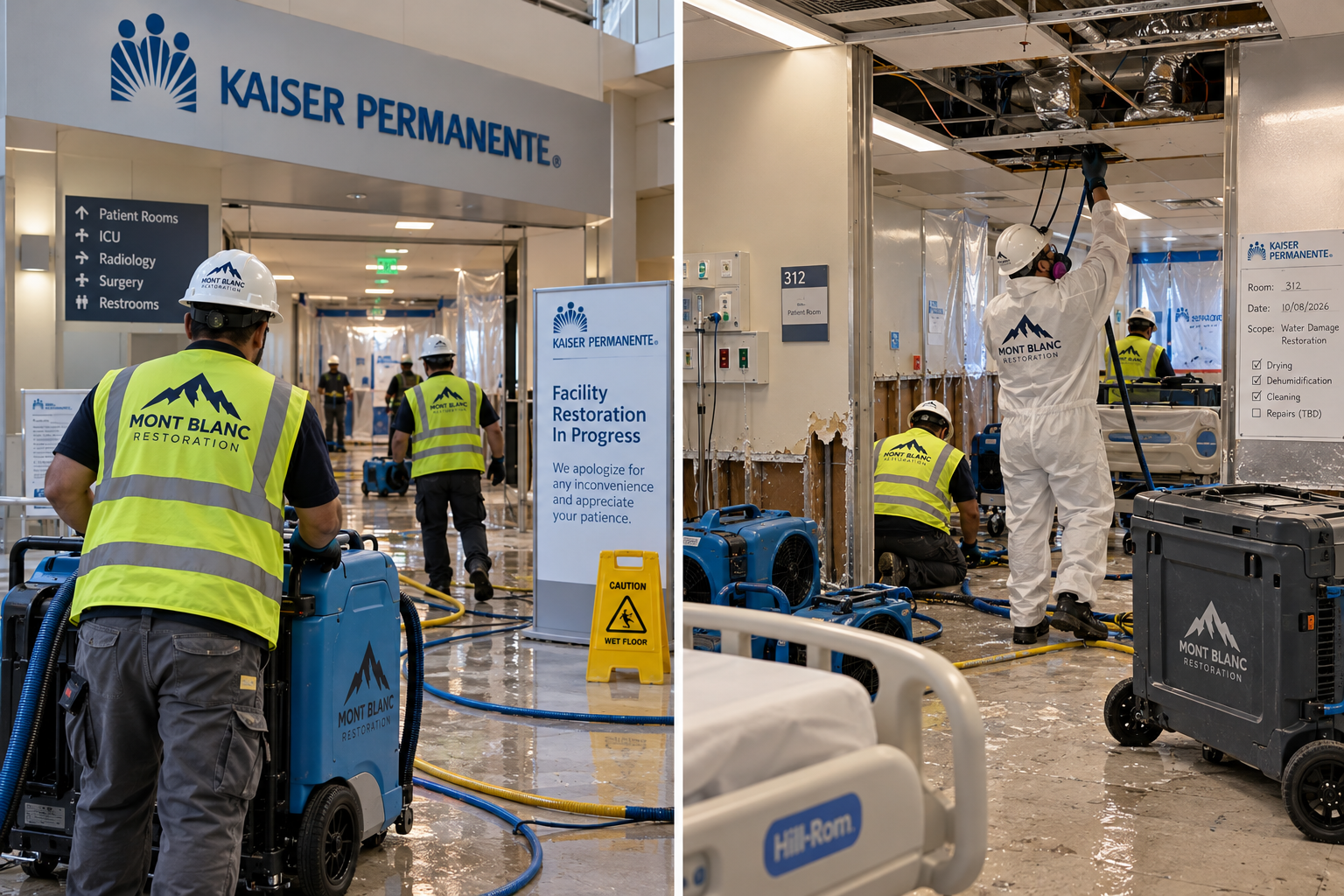
Complex buildings
Plan around the property.
Imagery and video supplied for this website. Facility names visible in imagery are not a claim of client affiliation or endorsement; these materials are not independently verified case-study records.
06 / The knowledge center
Better prepared.
Better informed.
07 / Questions worth asking
Clarity before
the next step.
Practical answers for building owners and the teams managing a loss.
What should a facility manager do first after a flood?
Keep people away from electrical hazards, unstable ceilings, and contaminated water. Contact emergency responders when needed. If safe and authorized, isolate the source, document the affected areas, and notify your building team and insurer. Call our emergency line to discuss site access and next steps.
Can a business stay open during restoration?
It depends on the damage, contamination, access routes, and occupancy requirements. Phased work and isolated work zones may help maintain unaffected operations. Healthcare and food-service facilities need additional coordination with their infection-prevention or regulatory teams. Safety takes priority over reopening.
How is a commercial building verified dry?
Technicians compare material moisture measurements with appropriate dry references and record temperature and relative humidity. A dry-looking surface is not enough: cavities, insulation, flooring assemblies, and adjacent rooms may need investigation. Drying ends when documented goals are met, not simply after a fixed number of days.
Does insurance cover mold and business interruption?
Coverage depends on the policy, cause of loss, endorsements, exclusions, and notice requirements. Mold limits and business-interruption waiting periods vary. Restoration documentation supports the adjuster’s evaluation but cannot guarantee coverage or payment. Ask your insurer or licensed insurance advisor to interpret your policy.
Do you respond across California?
Mont Blanc is California-based, with listed offices in Pasadena, Glendale, Beverly Hills, and Agoura Hills. Call with the property location and scope so we can confirm crew availability, mobilization requirements, and estimated arrival. Do not assume a statewide response-time guarantee.
How do I request a commercial assessment?
Call (747) 977-6919 for an active emergency. For a planned assessment, share your contact details, property location, building use, affected areas, and access restrictions using the assessment form. A submission requests a callback; it does not reserve an appointment.
08 / Let’s get your recovery moving
Your next step
starts here.
An active emergency or a planned commercial assessment. Start a conversation with Mont Blanc about your building, your priorities, and your next steps.
24/7 emergency contact
(747) 977-6919
California-based. Location-specific response.
Offices listed in Pasadena, Glendale, Beverly Hills, and Agoura Hills. For projects elsewhere in California, call to confirm scope, crew availability, and mobilization.
View contact details & offices
